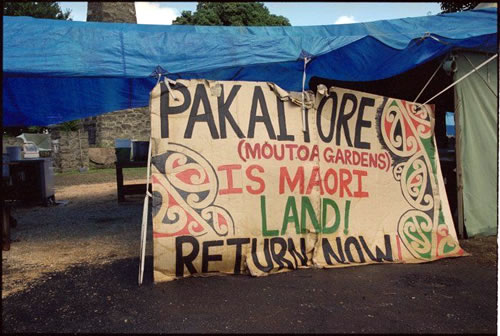
 | In 1995 a 79 day protest action took place in the Moutoa Gardens in Whanganui to demand for the return of the two-and-a-half-acre public park. During the protest serveral events happened, one of those being a police invasion in the middle of the night.For 79 days between February and May 1995, Whanganui Maori and supporters occupied Pakitore, otherwise known as Moutoa Gardens, beside the river in Whanganui city, as a sign of frustration over the lack of progress towards a settlement of Whanganui River claim issues. |
What events led to the protest action at Motua Gardens?
- The occupation was an attempt to restore the mana of the Whanganui people over the sit
- Their demonstration over ownership of the park also became a protest about the loss of traditional rights.
- This dispute highlighted the way in which historic issues dating back to the initial European settlement of the area remained unresolved. These issues have come to the fore again in recent debates over whether the city of Wanganui should be renamed Whanganui. Early translators missed the silent ‘h’ in the local Maori dialect and spelt the town - and the river - Wanganui.
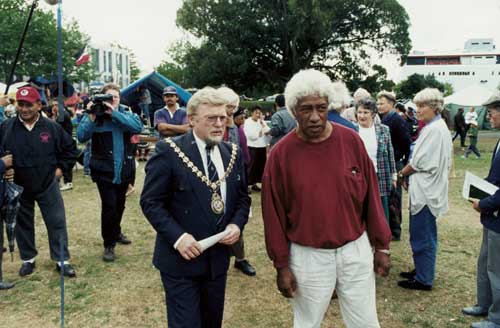 | During the 79 day protest that occupied Moutoa Gardens several important events occurred, one of those events being a police invasion in the middle of the night. Police claimed that the protest had become ‘a haven for criminals, stolen property and drug users’. During the invasion ten people were arrested on minor charges, which included: “breach of the peace” and “assault”, despite there being a strict on drugs or alcohol policy on site during the occupation. Occupation leader Niko Tangaroa told reporters that police were very rough with one of the young men during the raid. Tangaroa said “his face was rubbed into the ground, and he was abused, and a gun was put to his head. They said ‘don’t move nigger, or I’ll blow you away.’ that was witnessed by others around.” a Wanganui church minister witnessed many of the almost nightly harassment the protesters received by local police. The minister said ’he had witnessed police circling their cars outside the gardens and abusing the occupants as “niggers” and black bastards.” |
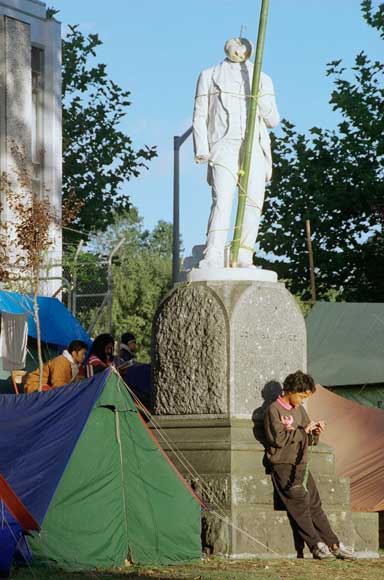
(Right)Also during the occupation a statue of former Prime Minister John Balance was beheaded (and later removed), and is yet to be replaced. Although there is now a statue of balance outside the Wanganui District Council. How did the protest end?
|  |
